
Growing Hope, Food Security, and the Next Generation of Change-makers.
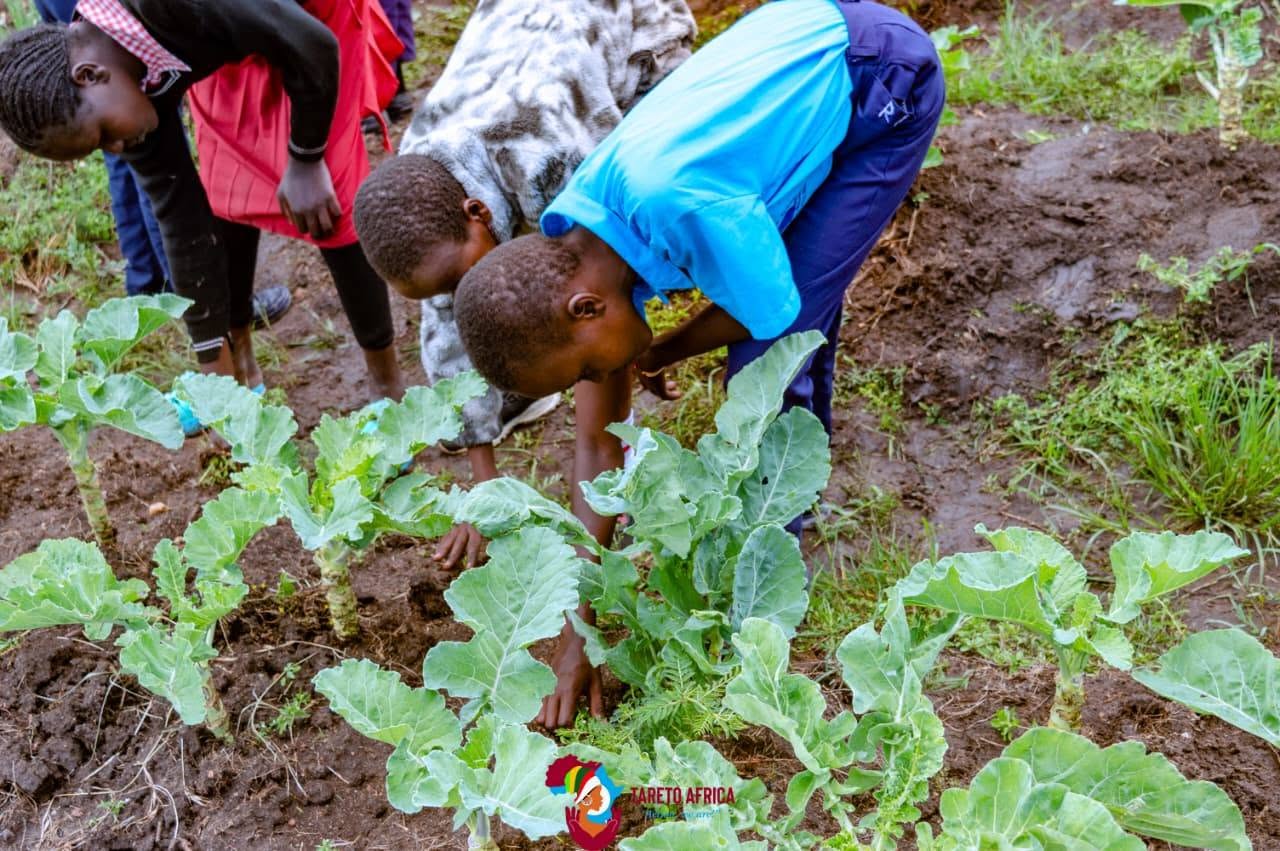
There is something powerful about watching a child hold a vegetable they helped grow.
For a school child in rural Kenya, that moment can mean much more than food. It can be the first time they see what is possible when a small seed is given water, care, and time. A school garden can become a place where children learn how to grow vegetables while developing responsibility, teamwork, environmental awareness, and confidence in their ability to contribute to their communities.
In Kenya’s arid and semi-arid regions, where drought, unpredictable rainfall, and food insecurity continue to affect pastoral communities, these lessons matter. At Tareto Africa Trust, our work with Maasai communities is rooted in the belief that lasting change begins when communities have the knowledge, resources, and opportunities to build more resilient futures. Our work spans education, health, humanitarian support, climate action, and community development.
Against this understanding, our school gardens projects bring many of these priorities together in one practical space. What may look like a small patch of vegetables behind a classroom has become a source of nutritious food, a practical agricultural classroom, and a starting point for conversations about climate resilience, sustainable agriculture, and the future of farming in Africa.
More Than a Garden to a Different Kind of Classroom
When people think about agriculture, they may picture large farms, machinery, and commercial markets. In rural schools, however, agricultural learning can begin much more simply, with children getting their hands into the soil. Through school vegetable gardens, pupils learn that growing food requires patience, care, and consistency. They see what happens when a plant receives enough water and what happens when it does not. At the same time, they learn to share responsibilities, work together, and understand how their actions can influence the results they achieve.
These are lessons that cannot always be taught through a textbook. Instead, a garden gives children a living classroom for their competency based education (CBE). For Tareto Africa, integrating gardens into schools and Early Childhood Development and Education (ECDE) centres also creates an opportunity to connect learning with nutrition and practical life skills.
Growing Food for Healthier School Meals
In communities facing food insecurity, hunger can make it difficult for children to attend, concentrate and participate fully in school. School gardens can help address part of this challenge by providing fresh vegetables that supplement school meals making home grown school feeding interventions cheaper. Depending on local conditions and the crops grown, gardens may support:
- Leafy greens and vegetables for daily meals
- Legumes and other nutrient-rich crops
- Fruits from school orchards
- Practical, experience-based nutrition education
- A steadier food source during lean seasons
Consequently, children can learn where some of the food they eat comes from while developing a practical understanding of nutrition. The garden becomes part of the school environment rather than an activity that exists separately from education.
Learning Responsibility One Seed at a Time
Beyond nutrition, a garden teaches something that cannot easily be measured in kilograms of vegetables: responsibility.
A seedling does not grow because someone tells it to. It needs regular attention. When pupils share responsibility for watering, tending, and maintaining garden beds, they begin to see the relationship between effort and results. Moreover, the experience can support several aspects of youth empowerment, including:
- Responsibility and accountability
- Teamwork and communication
- Leadership and decision-making
- Problem-solving
- Environmental awareness
- Confidence in practical skills
And then there is the moment of harvest. A child who has watched a seed develop into something they can eat has experienced a tangible form of achievement. They have not simply learned about agriculture; they have helped produce something. That experience can encourage children to see themselves not only as learners, but also as people capable of creating value.
What Children Learn at School Can Travel Home
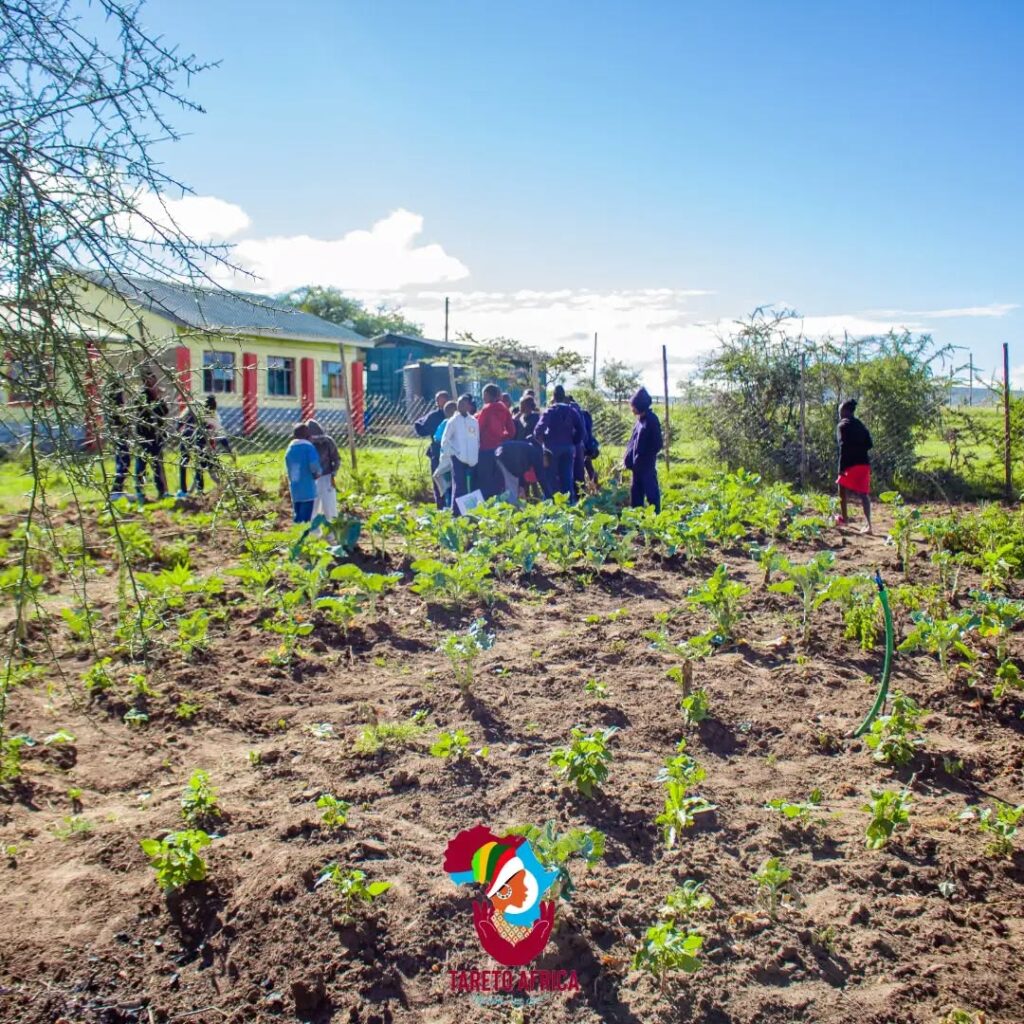
Perhaps one of the most important aspects of a school garden is what happens after the school day ends. Children rarely keep everything they learn inside the classroom. For example, when pupils learn how to grow vegetables, conserve water, make compost, or care for soil, those lessons can become conversations at home. A child may return home with an idea for a kitchen garden, explain how compost works, or encourage a family member to try a technique they learned at school.
As a result, families that see crops growing successfully at school may become interested in establishing small home gardens of their own. For households facing rising food prices and uncertain livelihoods, growing some food locally can provide an additional source of household nutrition while reducing reliance on purchased vegetables.
This ripple effect is particularly important when thinking about sustainable farming. Agricultural knowledge does not have to remain within the boundaries of a school project. Instead, it can become knowledge that children carry into their homes and communities.
Preparing Children for a Changing Climate
For pastoral communities across East Africa, climate change is not an abstract idea. Droughts, erratic rainfall, water shortages, and land degradation can directly affect household livelihoods. When traditional sources of income and food become increasingly vulnerable, communities need young people who understand how to adapt.
Therefore, agricultural education needs to go beyond simply teaching children how to plant crops. Climate smart agriculture can introduce young people to ways of producing food while paying attention to soil health, water conservation, biodiversity, and the long-term productivity of the land.
Learning to Use Water Wisely
Rainwater harvesting can help schools collect and store water for use during drier periods. Similarly, efficient irrigation methods can help direct water where plants need it while reducing unnecessary loss.
For children, however, these are not simply technical farming methods. They are practical lessons about one of the most important resources in their communities. Instead of learning about water conservation only as a concept, pupils can see why every drop matters.
Turning Waste Into a Resource
Composting provides another practical lesson. Organic school waste, dried leaves, and appropriate animal manure can be combined to produce compost that supports soil fertility. In this way, children learn that materials often considered waste can have another purpose. Furthermore, composting introduces a more circular approach to agriculture by encouraging communities to make productive use of locally available resources.
Protecting and Restoring the Soil
School gardens can also provide an introduction to regenerative agriculture. Depending on local conditions, practices such as mulching, crop rotation, intercropping, composting, and maintaining soil cover can help protect soil and retain moisture.
For children living in areas where prolonged dry seasons can make farming difficult, understanding the relationship between healthy soil and productive crops is an important part of climate education. More importantly, it teaches them to think about the condition of the land they will depend on tomorrow.
Growing Trees Alongside Food Crops
Tareto Africa’s climate action work includes tree planting within communities using the tree for girls iniative. In addition, integrating trees with food production can introduce children to agroforestry and the wider environmental role of trees. Fruit-bearing trees may provide future nutritional benefits, while other trees can contribute shade, wind protection, habitat, and broader ecological benefits.
For a child, planting a tree also introduces a different sense of time. A vegetable may be harvested within a season, whereas a tree can remain part of a community for years. Thus, planting trees becomes a lesson in environmental stewardship: some of what we plant today is meant to benefit people in the future.
Food Security and the Opportunity to Stay in School
Food security is closely connected to education. In pastoral communities facing severe drought and poverty, families can be forced into difficult decisions when resources become scarce. Girls, in particular, can face additional barriers to staying in school, including economic hardship and harmful practices such as abseentism, early marriage and Female Genital Mutilation (FGM).
Tareto Africa’s wider work includes programmes supporting girls through education, mentorship, healthcare, scholarships, and protection from harmful practices. Its work on menstrual health is one example of how practical support can address barriers affecting girls’ education. You can learn more through Tareto Africa’s menstrual hygiene initiatives in Narok County.
School gardens are not a solution to all of these challenges. Nevertheless, they can form part of a wider support system by strengthening school nutrition and helping schools build more resilient food systems.
When children have access to nutritious food and a supportive learning environment, there is greater opportunity for them to remain engaged in education. For girls, in particular, that opportunity matters enormously.
Changing How Young People See Agriculture
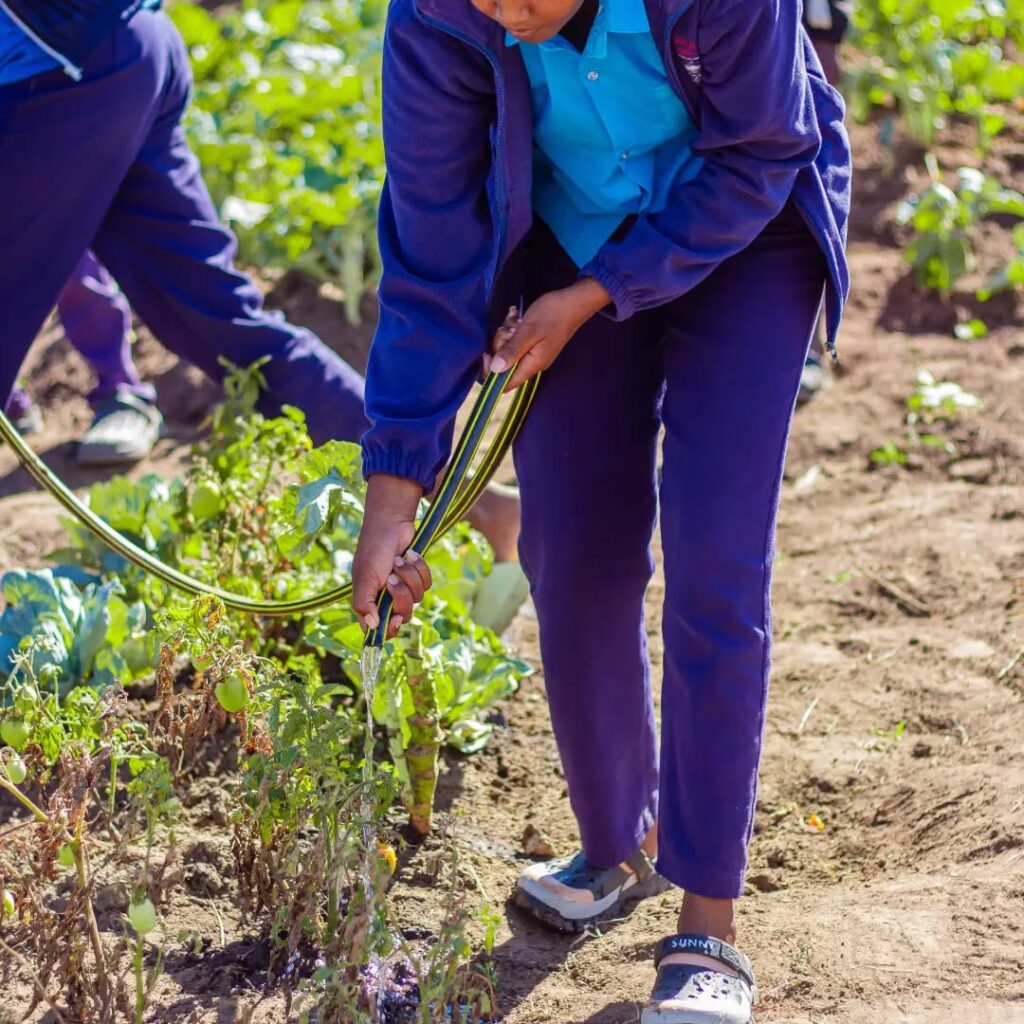
There is another challenge that begins with perception. Across Africa, agriculture is sometimes viewed by young people as physically demanding work with limited financial opportunity. Yet the sector is changing. Modern agriculture increasingly involves technology, environmental science, data, water management, business planning, research, and innovation.
School gardens therefore provide an early opportunity to introduce children to this broader picture:
- A pupil learning about soil is also learning about science.
- A pupil measuring water is learning about resource management.
- A pupil planning what to plant and when to harvest is beginning to understand production and planning.
- A pupil who compares different crops or tracks growth is beginning to see how observation and data can improve agricultural decisions.
Furthermore, these experiences can help young people understand that agriculture is not limited to traditional farming. That shift in perspective is particularly important for a continent with one of the world’s youngest populations.
From School Gardens to Economic Empowerment
The long-term value of school gardens goes beyond what is harvested from the garden itself. When children gain practical agricultural knowledge, they are gaining skills that may become useful later in life. With additional education, training, access to markets, finance, and technology, those skills can contribute to livelihoods and entrepreneurship. This is where farming and economic empowerment intersect.
Young people who understand sustainable farming may be better positioned to explore opportunities across the wider agricultural value chain, including:
- Crop production and agribusiness
- Food processing and value addition
- Agricultural technology
- Environmental and climate-related enterprises
- Farm management and consultancy
- Agricultural finance
- Local food businesses and markets
However, the objective is not to tell every child that they must become a farmer. Rather, it is to ensure that agriculture is presented as a field with knowledge, innovation, entrepreneurship, and real economic potential.
Why School Gardens Need Your Investment
The potential of school gardens is significant, but expanding and sustaining them requires resources. Schools may need appropriate infrastructure, seeds, tools, water systems, training, and ongoing maintenance. Teachers and community members also need support to ensure that gardens remain productive rather than becoming short-term projects. This is where your funding and partnership become important.
Tareto Africa Trust is expanding its school-based agricultural programmes. We are seeking funding and donation opportunities from philanthropic organizations, corporate partners, foundations, development programmes, and grants both local and international. Your Support will help in financing practical needs such as:
- vegetable Seeds and gardening tools
- Water boreholes, Water-storage and piping infrastructure
- Drip Irrigation Systems
- Teacher and community training
- Tree seedlings and environmental activities
- Garden maintenance
- Nutrition and agricultural education
- Monitoring and evaluation
Moreover, funding a school garden is about more than purchasing inputs. It can contribute to an integrated approach connecting education, food security, climate resilience, youth empowerment, and sustainable agriculture.
Organizations and individuals interested in supporting this work can also explore how our partnerships work as well as other relevant broader development and knowledge-building initiatives.
The Wider Impact of Investing in School Gardens
| Area | What School Gardens Can Provide | Potential Wider Benefit |
| Nutrition | Fresh vegetables and practical nutrition education | Greater awareness of healthy food and support for school meals |
| Education | Practical agricultural and environmental learning | Stronger life skills and climate awareness |
| Water Management | Rainwater harvesting and efficient irrigation | More responsible use of scarce water |
| Environment | Composting, agroforestry, and soil conservation | Healthier and more resilient growing environments |
| Youth Empowerment | Teamwork, responsibility, leadership, and practical skills | Greater confidence and awareness of future opportunities |
| Food Security | Local food production and agricultural knowledge | Stronger household and community food resilience |
| Economic Empowerment | Exposure to farming, agribusiness, and value addition | Potential pathways toward future livelihoods and enterprise |
Ultimately, the goal is not simply to create more gardens. It is to create more opportunities for children to learn, eat well, care for their environment, and imagine themselves as part of the solution to the challenges facing their communities.
Every Harvest Begins With a Seed
It is easy to look at a school garden and see only vegetables growing in the soil. Look more closely, however, and there is much more happening. There is a child learning where food comes from. There is a teacher turning a garden into a classroom. There is a school creating an opportunity to connect nutrition with education. There is knowledge moving from the classroom to the family home. There is a young person learning that water is a resource worth protecting and that healthy soil matters. There is the possibility of a young person beginning to see agriculture differently. And,last but not least there is a community taking a practical step toward greater resilience.
Instead of viewing it simply as a traditional livelihood, they can begin to see it as a field connected to science, innovation, entrepreneurship, environmental protection, and economic opportunity. This is why school gardens matter to Tareto Africa. They are not presented as a single answer to poverty, food insecurity, climate change, or educational inequality. Rather, they are one practical way of bringing several solutions together at the community level.
With the right partnerships, funding, knowledge, and long-term commitment, more rural schools can create spaces where children learn not only to read about the world around them, but also to care for it and contribute to it. Every garden begins with something small:
- A seed.
- A little water.
- A patch of soil.
- A child who learns that, with care and patience, something can grow.
To learn more about Tareto Africa’s programmes and opportunities to support its work, visit Tareto Africa’s official website.